
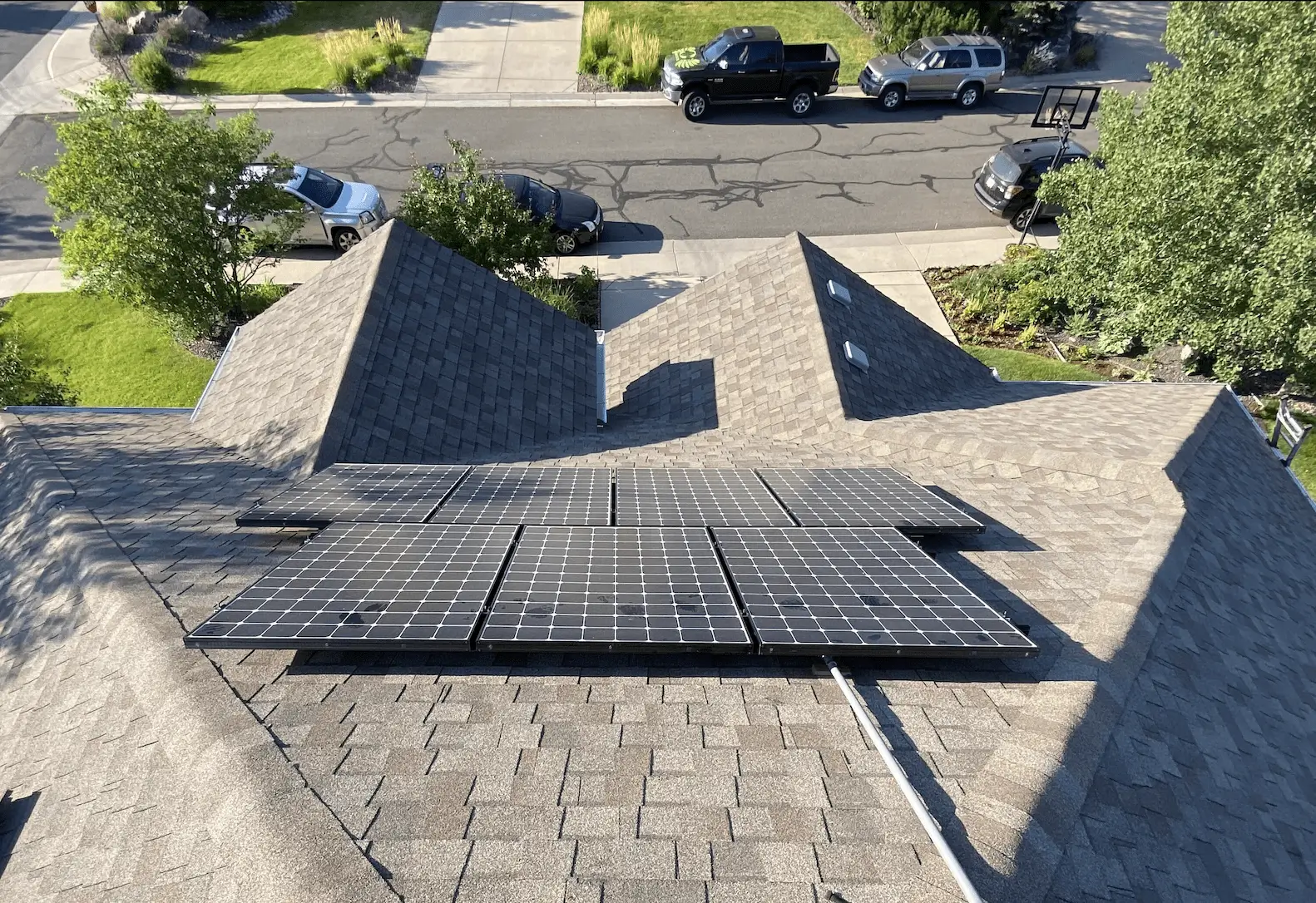
Everything Front Range homeowners need to know about safely removing and reinstalling solar panels for roof work, hail repair, and renovations.
If you have solar panels and need a new roof, storm repairs, or a major renovation, you’ve probably run into a frustrating problem: your panels are in the way, and the company that installed them may no longer be around to move them. That’s where solar panel removal and reinstallation, known in the industry as detach and reset (D&R), comes in.
It sounds simple: take the panels off, do the roof work, put them back. In practice, it’s a specialized job that touches your roof, your electrical system, and your solar warranty all at once. Done wrong, it can void warranties, cause leaks, or leave your system underperforming for years. Done right, it protects your investment and gets your system producing again as if nothing happened.
This guide walks you through when detach and reset is needed, how the process actually works, what it costs in Colorado, and why it’s worth hiring a solar specialist rather than a general roofer.
What Is Solar Panel Detach and Reset?
Detach and reset is the professional removal of your solar panels and mounting hardware, followed by their reinstallation after other work is complete. A proper D&R includes:
- Safely powering down and disconnecting the system
- Removing the panels, racking, and mounting hardware
- Labeling and storing components so nothing is lost or damaged
- Reinstalling everything after the roof or structural work is finished
- Re-sealing every roof penetration to prevent leaks
- Testing the system and confirming it’s producing at full capacity
It is not just “unscrewing panels.” Your solar array is a live electrical system bolted through your roof. Handling it correctly requires knowledge of both the electrical side and the roofing side, which is exactly why it falls into a gray area that trips up a lot of homeowners.
When Do You Need Solar Panel Removal and Reinstallation?
There are a handful of common situations where Colorado homeowners need a detach and reset:
Roof Replacement
This is the most common reason. Asphalt shingle roofs typically last 15 to 25 years, and many solar systems installed a decade ago are now sitting on roofs that are due for replacement. You cannot re-roof underneath panels, so they have to come off and go back on. (More on this below, because it’s the single most-asked question we get.)
Hail and Storm Damage
Colorado’s Front Range sees some of the most intense hail in the country. When a storm damages your roof, insurance often covers a full roof replacement, and the solar panels have to be detached so the roofers can work. In some cases the panels themselves are damaged and need repair or replacement at the same time.
Home Renovations and Additions
Adding a second story, changing your roofline, installing skylights, or expanding your home may require temporarily removing panels that sit in the work zone.
Selling or Buying a Home
A roof or system issue flagged during a home sale inspection sometimes requires panels to be removed so repairs can be made before closing.
Relocating Your System
Occasionally homeowners want panels moved to a better-producing section of the roof, or removed entirely for a project and reinstalled elsewhere.
Do You Need to Remove Solar Panels for a Roof Replacement?
Short answer: yes, almost always.
Roofers cannot install a new roof underneath your solar panels. The panels, the racking, and every roof penetration point sit directly on the surface that needs to be torn off and replaced. Trying to work around them isn’t just impractical, it leaves old flashing and penetrations in place under a brand-new roof, which is exactly where leaks start.
The right sequence is:
- Solar specialist detaches and safely stores the panels and racking
- Roofer completes the full roof replacement on a clean surface
- Solar specialist reinstalls the array with new flashing and fresh sealant at every penetration
- System is tested and confirmed producing at full output
Coordinating the two trades is where things get complicated, which is why many homeowners prefer a company that understands both roofing and solar and can schedule the work so the roof is never left exposed.
Why You Shouldn’t Let Just Any Roofer Move Your Panels
When a roofing crew offers to “handle the solar” as part of the job, it’s tempting to say yes. Resist it. Here’s why this decision matters more than most homeowners realize.
Warranty risk. Most solar panel and inverter manufacturers require that qualified personnel handle the equipment. If an unqualified crew removes and reinstalls your panels, you can void the manufacturer warranty on hardware worth tens of thousands of dollars.
Electrical safety and code. Your array is a live DC electrical system. Disconnecting and reconnecting it correctly, and to current code, requires proper training. Mistakes here are both a safety hazard and a failed-inspection waiting to happen.
Roof penetration and leaks. Every mount point is a hole through your roof that must be re-flashed and sealed properly on reinstall. This is the intersection of roofing and solar expertise, and it’s the number one place shortcuts cause expensive water damage later.
Production losses. Panels reconnected incorrectly, or reinstalled at the wrong angle or with damaged wiring, can quietly underproduce for years. You often won’t notice until your utility bills creep up.
A dedicated solar service company handles the panels correctly, protects your warranties, and re-seals the roof to a standard that keeps water out.
Colorado-Specific Considerations
Reinstalling solar in Colorado isn’t the same as reinstalling it elsewhere, and this is where local expertise really pays off.
Wind load and building codes have changed. Following the Marshall Fire, Colorado updated wind load requirements affecting how solar systems must be engineered and secured. A reinstall done to today’s code may require different mounting than your original installation from years ago. A local specialist reinstalls to current requirements, not outdated ones.
Hail resilience. Because Front Range hail is a when-not-if event, how your system is reinstalled and inspected for existing damage matters. A thorough D&R is a good moment to catch micro-cracks or marginal components before the next storm finds them.
Local permitting and inspection. Reinstalls often require permits and inspection depending on the jurisdiction. A Colorado-based solar company knows the local authorities and keeps your project compliant.
How Much Does Solar Panel Detach and Reset Cost in Colorado?
Cost depends on several factors, so be wary of anyone who quotes a firm price sight unseen. The main drivers are:
- System size — the number of panels is the biggest factor
- Roof complexity — steep pitches, multiple planes, and difficult access add labor
- Racking type — some mounting systems are more labor-intensive to remove and reset
- Condition of existing hardware — aging racking or wiring may need replacement
- Coordination needs — timing around a roofer or other trades
Because these vary so much home to home, the honest answer is that a proper on-site assessment is the only way to get an accurate number. Beware of quotes that seem unusually low, since they often skip the re-sealing and code compliance steps that protect you long term.
What to Look for in a Detach and Reset Company
If you’re hiring for a D&R, look for:
- Solar-specific experience, not a roofer moonlighting on solar
- Roofing knowledge too, so roof penetrations are re-sealed correctly
- Proper licensing and insurance for electrical solar work
- A local presence that understands Colorado code and can service you long-term
- Clear communication about scheduling around your roof or renovation work
- A written scope covering removal, storage, reinstallation, sealing, and testing
Protect Your Solar Investment
Your solar system is one of the larger investments in your home, and detach and reset is the service that protects it through every roof replacement, storm, and renovation over its lifetime. Handled by a specialist, it’s a straightforward project that gets your panels back to producing clean energy safely and to current code. Handled by the wrong crew, it’s a source of voided warranties, leaks, and lost production.
If you have a roof replacement, hail repair, or renovation coming up and need your panels safely removed and reinstalled, reach out for a free assessment. As a Colorado-owned solar company with decades of combined solar and roofing expertise, we handle detach and reset the right way, protecting your warranty, your roof, and your energy production.
Related Reading
- Do You Need to Remove Solar Panels for a Roof Replacement?
- Solar Hail Damage in Colorado: What to Do After a Storm
- How Colorado’s Wind Load & Building Code Changes Affect Solar Installations
- Buying or Selling a Home with Solar Panels in Colorado? Get an Inspection First



Leave A Comment