
If your roof is due for replacement and you’ve got solar panels on it, you already know the panels complicate things. The good news: a roof replacement with solar is a routine, well-understood project. The bad news: it goes sideways when it’s planned poorly. This guide is about planning it well — so you know the sequence, the timeline, the costs, and the exact questions to ask before the work starts.
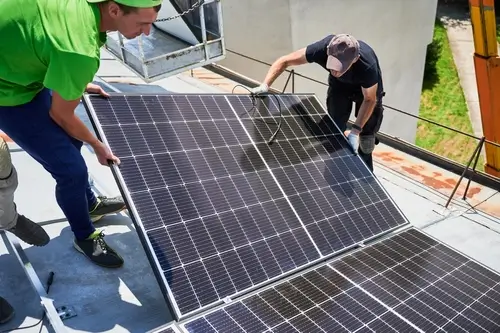
Short Answer: Yes, the Panels Come Off First
In nearly every case, your solar panels must be removed before a new roof can go on, then reinstalled afterward. Your array is bolted through the roof deck and covers much of the surface, and a proper roof replacement means stripping down to the deck and starting clean. There’s no re-roofing around panels, and leaving old penetrations under a new roof is how leaks begin. This removal-and-reinstall job is called a solar detach and reset.
For the full “why it has to happen this way” explanation, see our companion post, Do You Need to Remove Solar Panels for a Roof Replacement?. This article picks up where that one leaves off: how to plan the project.
The Right Sequence — and Who Does What
A roof replacement with solar is two trades that have to be choreographed. Here’s the sequence a well-run project follows:
- Solar detach — a solar specialist documents and tests the system, powers it down, disconnects it safely, and removes the panels, racking, and hardware, labeling and storing everything.
- Re-roof — the roofing crew tears off and replaces the roof on a clean, unobstructed deck.
- Solar reset — the solar specialist remounts the array, re-flashes and seals every penetration, reconnects the system, and powers it back up.
- Testing — the system is confirmed to be producing at full output, with any re-inspection or utility notification handled.
The make-or-break detail is timing steps 1 through 3 so your roof is never left open to Colorado weather and your system is offline for the shortest possible window. This is why so many homeowners now prefer a team that understands both the solar and roofing sides and can schedule the whole thing as one coordinated project rather than juggling two contractors who don’t talk to each other.
What to Budget For
Your roof replacement and your detach and reset are two separate line items. When you’re budgeting, plan for:
- The re-roof itself (your roofer’s scope)
- The detach and reset (your solar contractor’s scope), which varies with system size, roof complexity, and racking type
- Any code-compliance upgrades — in Colorado, updated wind-load rules can mean your reinstall needs additional or different mounting
- Any equipment that shouldn’t go back up — if inspection finds hail-cracked panels or corroded racking
If the roof job stems from covered storm or hail damage, the detach and reset is often included in the insurance claim — potentially with little to no out-of-pocket cost. We break the numbers down in How Much Does It Cost to Remove and Reinstall Solar Panels in Colorado?

How Long Will My System Be Offline?
A typical detach and reset runs 2–4 days, depending on system size and how the roofing slots in between. Removal is usually a single day; reinstallation and reconnection follow once the roof is done. A good contractor schedules it so your downtime is minimal and your roof is never exposed overnight to weather.
Will This Affect My Warranty or Production?
It can — for better or worse — depending entirely on who does the work:
- Warranties stay intact when qualified solar professionals handle the equipment to manufacturer specifications. An untrained crew can void panel and inverter warranties worth tens of thousands of dollars.
- Production stays consistent when the array is remounted at the correct angle, wired correctly, and reconnected to code. Sloppy reinstalls can quietly underproduce for years, showing up only as higher utility bills.
This is the core reason to keep your panels in the hands of a dedicated solar specialist rather than a general roofing crew — a point we make in detail in our companion article.
The Questions to Ask Before Work Starts
Before you sign anything, ask:
- Who is physically removing and reinstalling my panels — the roofer, or a qualified solar contractor?
- Are the crews NABCEP-certified, and is the electrical work done by licensed technicians?
- Will you document and test my system before removal so there’s a performance baseline?
- How will you re-flash and seal every roof penetration on reinstall?
- Will you reinstall to current Colorado wind-load code, and will that require new mounting?
- How will the solar and roofing schedules be coordinated so my roof isn’t left exposed?
- If this is an insurance claim, can you prepare a documented D&R scope for my carrier?
If a contractor can’t answer these cleanly, keep looking.
A Smart Moment to Inspect Your Panels
Because so many Colorado roof replacements are triggered by hail, the detach is the ideal time to inspect the panels themselves for micro-cracks and marginal components before they go back up. Since the array is already down, it costs nothing extra in access — and it can catch damage that belongs in your insurance claim. See Solar Hail Damage in Colorado: What to Do After a Storm for more.
The Bottom Line
Yes, your panels have to come off for a roof replacement — that part is simple. What separates a smooth project from an expensive headache is the planning: the right sequence, a
Related reading: Buying or Selling a Home with Solar Panels in Colorado? Get an Inspection First











Leave A Comment